Your pipeline runs itself. You step in when it matters.
It keeps every prospect that matters, decides what needs attention, and prepares the next step in one daily queue. You approve the judgment calls. It does the research, the drafting, the follow-ups and the CRM, from your own LinkedIn and your own Gmail or Outlook.
Built for 25 to 200 valuable accounts, not bulk cold email. Early access, free while in beta.
Automates what you do by hand in
Gmail
Apollo
HubSpot
Clay
Hunter
replies need your judgment
ready to approve
researched overnight
watched, nothing needed
follow-up due today
Why it is different
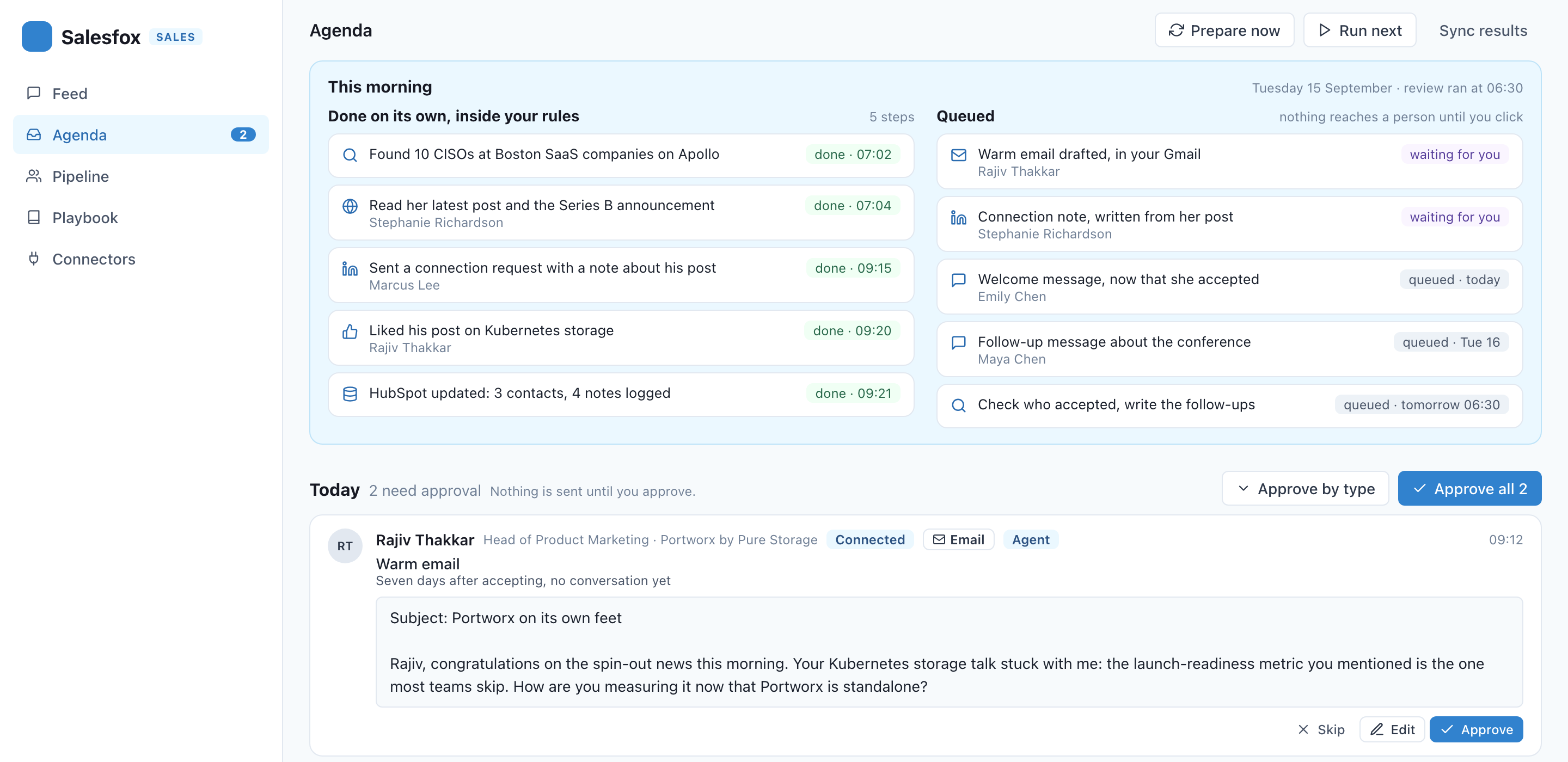
It decides each person's next step, and when it's due.
Not a sequence. It reads each person's record and your playbook, decides what should happen next, and puts it on your agenda. Every step has a reason, not a timer.
Observe
Decide
Prepare
Approve
Act
Record
Replan
Plans its own day
Each morning it starts new people at your pace, best fit first, and writes what came due. The rest wait in line.
Picks the tool
LinkedIn, your inbox, Apollo, HubSpot, a page on the web. You see which.
Wakes itself
A step comes due, a run finishes, someone replies: it reconsiders within minutes.
Learns the way you sell
Correct it once and it writes the rule down where you can read it.
What it does for every prospect
From first find to booked meeting.
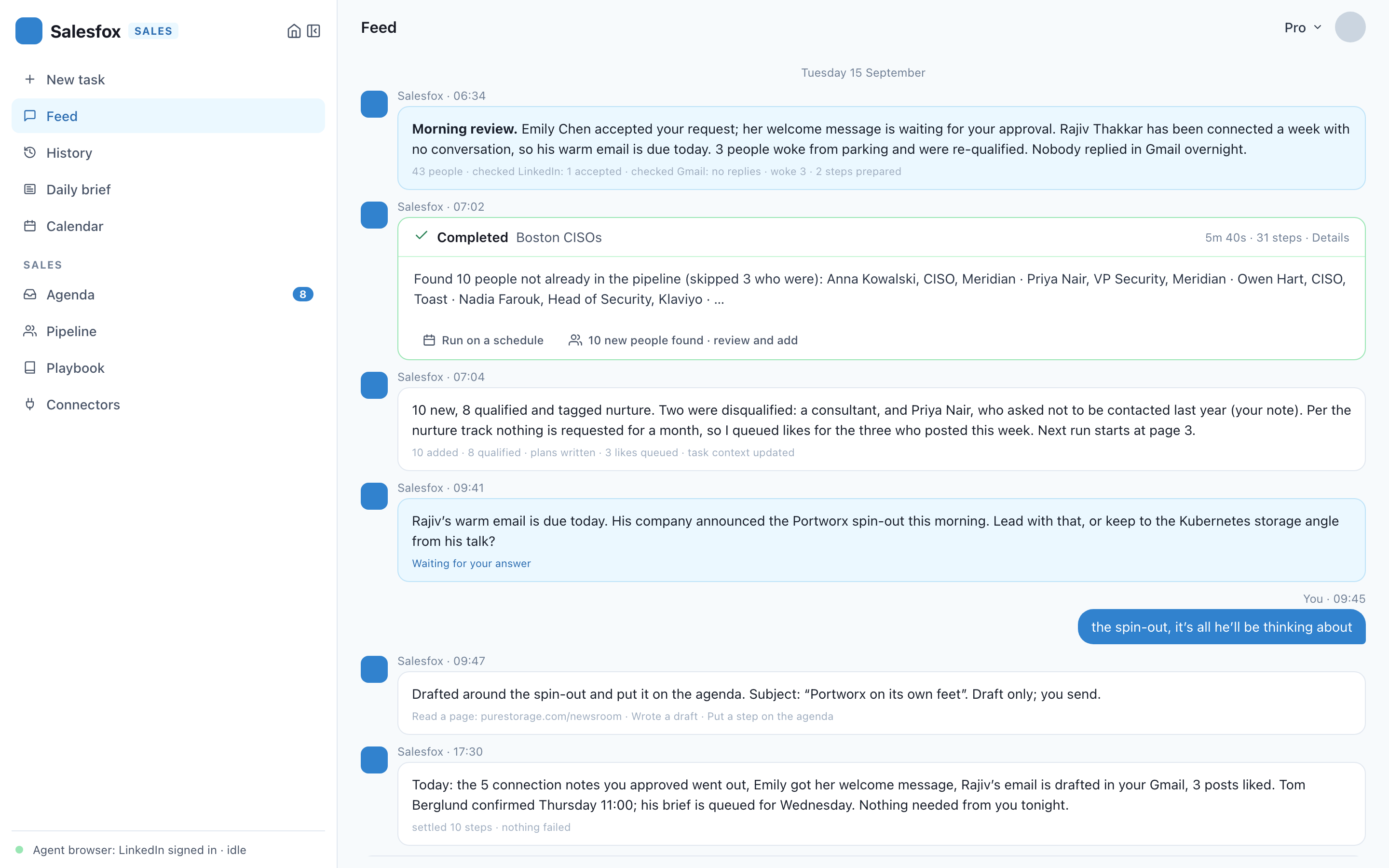
Finds them and builds the nurturing plan
Pulls people who match who you sell to from Apollo or LinkedIn, reads their posts and their company's news, and writes a plan for each: the angle, the channel, what comes next.
Why it sounds like you
You steer in plain words. It applies them to every person.
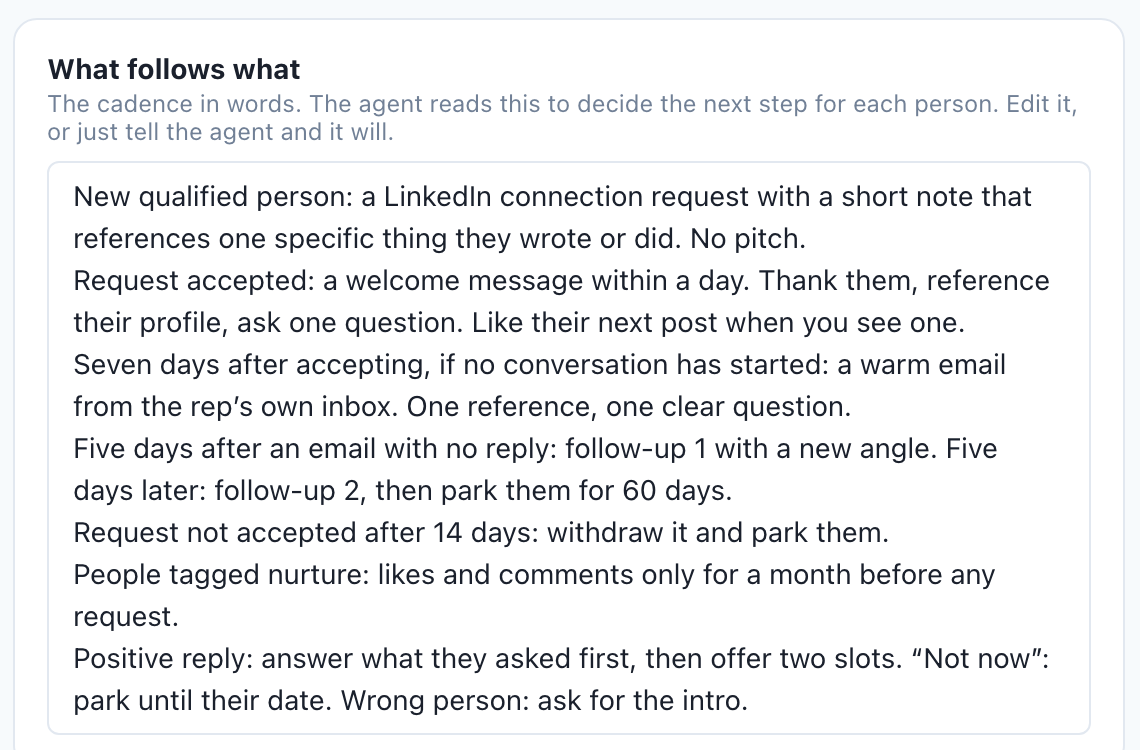
Your follow-up rhythm, in a sentence
“Accepted: welcome within a day. Quiet a week: warm email. Two follow-ups, then park.”
A plan for every person
The angle, the channels, what comes next, read before every word it drafts.
Rules in your words
“Never email on Fridays.” Say it once; it applies from then on.
Why you can trust it with your name
Not a word goes out in your name without you, enforced in code.
Approval is yours
Every request, message and email waits for your click. Auto is a switch per kind.
Caps and hours
Twenty a day, inside your hours, one at a time, from your own session.
Your inbox, your LinkedIn
Email goes from your own Gmail or Outlook, and replies come back to the person's record. LinkedIn is your own account, signed in by you; the agent never sees your password.
It stops when they answer
A reply cancels every queued follow-up for that person.
Why you keep your tools
It works inside what you already use, not instead of it.
Sign in once. It works as you from then on.
Gmail or Outlook
Connect once. Email goes from your own address, and replies land on the record within minutes.
Apollo
People and emails by API; your sequences for the cold tail.
HubSpot
Checks the contact first, logs every step.
Clay
Lists land in the pipeline as you build them.
Hunter
A work email from a name and a domain.
Who it is for
Founders still selling, the first rep, partnerships, recruiters with a shortlist.
Warm, named accounts. Not cold email at volume; keep your sequencer for that.
Early access
Free while in beta.
Free while in beta, for teams with 25 to 200 accounts that matter. Usage is visible from day one.
No card. Tell it who you sell to and it sets itself up.
Sandbird · built on Linefox